
What Is Warehouse Management?
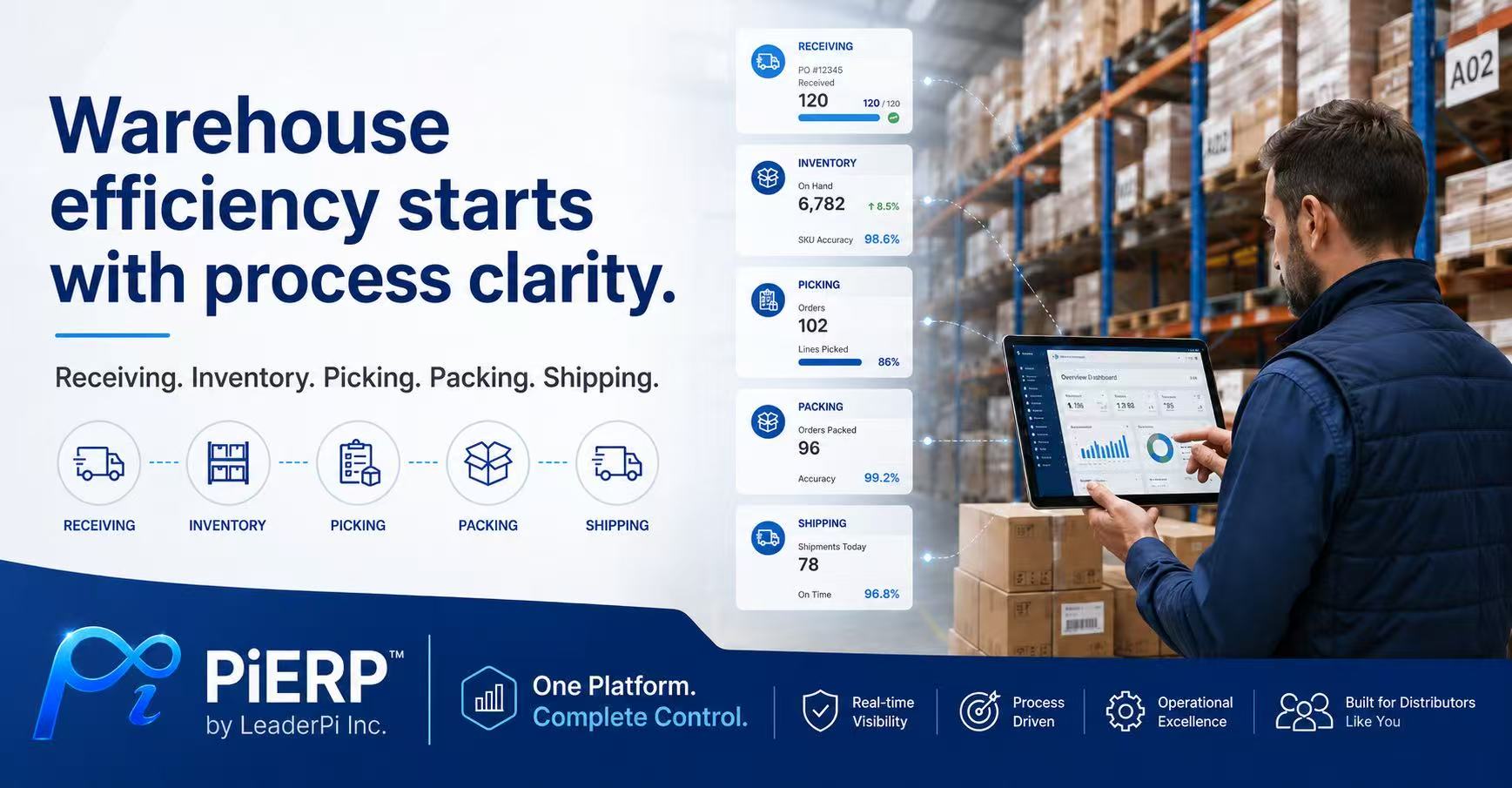
Warehouse management is the process of controlling how products are received, stored, moved, picked, packed, and shipped within a warehouse.
Its primary objective is to ensure that the right products are available in the right location, in the right quantity, and delivered to customers accurately and efficiently.
Modern warehouse management combines standardized operational procedures, trained personnel, warehouse technology, and software systems to improve inventory accuracy, productivity, and customer service.
Whether a company operates a single warehouse or a global distribution network, warehouse management plays a critical role in the overall supply chain.
Why Is Warehouse Management Important?
The warehouse is much more than a storage facility.
It is the operational hub where inventory moves through every stage of the fulfillment process.
Poor warehouse management can lead to:
- Incorrect inventory records
- Shipping errors
- Delayed customer deliveries
- Excess labor costs
- Lost inventory
- Overstocking and stock shortages
- Customer complaints
Well-managed warehouses help businesses improve operational efficiency while reducing costs and increasing customer satisfaction.
What Are the Main Goals of Warehouse Management?
A successful warehouse operation balances several objectives simultaneously.
Inventory Accuracy
Employees must know exactly what inventory is available and where it is located.
Accurate inventory reduces:
- Stockouts
- Emergency purchasing
- Customer delays
- Inventory adjustments
Faster Order Fulfillment
Customers expect orders to ship quickly.
Efficient warehouse processes reduce the time required to:
- Locate inventory
- Pick products
- Pack shipments
- Dispatch orders
Higher Productivity
Warehouse employees should spend more time handling products and less time searching for information.
Standardized workflows, barcode scanning, and optimized warehouse layouts all contribute to improved productivity.
Lower Operating Costs
Good warehouse management minimizes:
- Excess inventory
- Overtime
- Rework
- Picking mistakes
- Shipping errors
- Unnecessary inventory movement
Lower operating costs improve overall business profitability.
The Warehouse Management Process
Every warehouse operates differently, but most follow a similar sequence of activities.
1. Receiving
Receiving is the first operational step after products arrive at the warehouse.
Typical activities include:
- Verifying purchase orders
- Counting quantities
- Inspecting products
- Recording receipts
- Printing barcode labels
- Identifying damaged products
Accurate receiving establishes the foundation for inventory accuracy.
2. Putaway
Putaway is the process of moving received inventory into its assigned storage location.
Good putaway practices reduce future picking time and improve warehouse organization.
Many warehouses assign inventory using:
- Bin locations
- Rack locations
- Zone storage
- Product categories
3. Storage
Once inventory is stored, warehouse staff must maintain accurate location information.
Effective storage strategies consider:
- Product size
- Product weight
- Sales frequency
- Accessibility
- Safety requirements
Frequently picked products are typically stored closer to shipping areas.
4. Picking
Picking is the process of retrieving products to fulfill customer orders.
Common picking methods include:
- Single Order Picking
- Batch Picking
- Zone Picking
- Wave Picking
Choosing the right picking strategy depends on warehouse size, order volume, and product characteristics.
5. Packing
Packing prepares products for shipment.
Typical packing activities include:
- Quantity verification
- Protective packaging
- Shipping labels
- Carrier documentation
- Final inspection
Accurate packing reduces customer returns caused by shipping mistakes.
6. Shipping
Shipping completes the warehouse process.
Warehouse teams:
- Load trucks
- Confirm shipments
- Update ERP systems
- Send tracking information
- Close warehouse transactions
Timely shipping improves customer satisfaction and delivery performance.
Warehouse Management vs Inventory Management
Although these terms are often used interchangeably, they are different.
Inventory management focuses on:
- Inventory quantities
- Stock levels
- Replenishment
- Inventory valuation
Warehouse management focuses on:
- Physical inventory movement
- Storage locations
- Picking efficiency
- Packing
- Shipping
- Warehouse labor
Warehouse management answers: "Where is the inventory and how do we move it efficiently?"
What Is a Warehouse Management System (WMS)?
A Warehouse Management System, or WMS, is software designed to manage warehouse operations.
Typical WMS capabilities include:
- Receiving
- Bin Location Management
- Barcode Scanning
- Mobile Devices
- Pick Lists
- Packing Verification
- Shipping Integration
- Cycle Counting
- Inventory Transfers
- Warehouse Performance Reporting
Many ERP systems include warehouse management functionality, while larger operations may use a dedicated WMS integrated with ERP.
Common Warehouse Challenges
Warehouse managers frequently encounter challenges such as:
- Inventory discrepancies
- Picking errors
- Inefficient warehouse layouts
- Manual paperwork
- Lack of barcode scanning
- Poor inventory visibility
- Overstocked locations
- Labor shortages
Addressing these issues requires a combination of process improvements, employee training, and appropriate technology.
Best Practices for Warehouse Management
Organizations that consistently achieve high warehouse performance often adopt the following practices:
- Standardize receiving procedures.
- Assign fixed bin locations.
- Use barcode scanning wherever practical.
- Perform regular cycle counts instead of relying solely on annual inventory counts.
- Monitor warehouse KPIs.
- Optimize warehouse layout based on product movement.
- Integrate warehouse operations with ERP.
Technology is important, but consistent execution of well-defined processes is equally critical.
Expert Insight
One of the most common misconceptions is that a Warehouse Management System alone will eliminate inventory errors.
In reality, warehouse accuracy begins with disciplined operational practices. If receiving is incomplete, inventory is stored in the wrong location, or products are moved without recording the transaction, no software can maintain accurate inventory records.
Organizations that first standardize their warehouse procedures and then implement supporting technology typically achieve faster adoption and more reliable results.
Frequently Asked Questions
What is warehouse management?
Warehouse management is the process of receiving, storing, moving, picking, packing, and shipping inventory efficiently.
What is a WMS?
A Warehouse Management System is software that supports warehouse operations and inventory movement.
Is warehouse management the same as inventory management?
No. Inventory management focuses on inventory quantities and replenishment, while warehouse management focuses on the physical handling and movement of inventory.
What is the most important warehouse KPI?
There is no single KPI for every business, but inventory accuracy, order accuracy, and on-time shipment are among the most widely used performance indicators.
Do small businesses need warehouse management software?
Businesses with growing order volumes, multiple storage locations, or increasing operational complexity often benefit from warehouse management functionality, even if they operate a single warehouse.
Key Takeaways
Warehouse management is essential for ensuring products move through receiving, storage, picking, packing, and shipping accurately and efficiently.
By combining standardized processes, trained employees, and appropriate technology, businesses can improve inventory accuracy, reduce operating costs, and deliver better customer service.
As organizations grow, integrating warehouse operations with ERP provides greater visibility across purchasing, inventory, sales, and fulfillment, helping teams make better decisions and support long-term growth.
Ready to Replace Disconnected Warehouse Processes?
See how PiERP connects sales, purchasing, inventory, warehouse operations, customers, accounting, and reporting in one platform.
Book a Free Demo